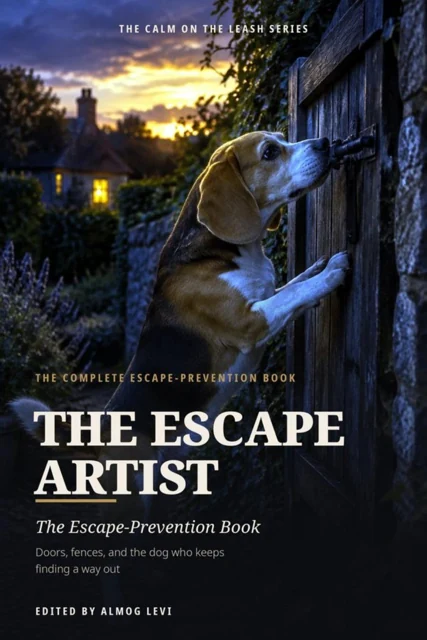
The door opens for a parcel and your dog squeezes past your leg. The street does not wait for training to catch up. Before teaching a cue, change the setup: put your dog in another room or behind a secure gate every time an outside door opens. Make sure everyone in the household knows the routine.
Check that gates latch, garden exits are secure, and your dog's identification details are current. Start with how dogs get out of the yard. If they have already escaped, use local lost-pet resources promptly and avoid chasing them into traffic. If bolting follows fireworks, visitors, or being left alone, that context matters, a dog trying to flee fear needs more than a sit at the door.
Practice with a safe second layer
Use an inside door or a quiet entrance first. With your dog on a secure leash, reward them for remaining with you as you touch the handle. Open the door a crack, reward if they can stay relaxed. Close it and repeat. If they lunge forward, make the step easier. The door opening can eventually become a cue to wait, but don't make the street-facing door your first test.
Keep a gate or closed internal door as backup during real arrivals, even after practice starts going well. Teach recall separately in a safe area, rewarding the dog well for returning, it is an extra layer, not permission to risk an escape.
If your dog has broken through barriers, repeatedly escaped, or seems panicked, ask your veterinarian and a qualified, reward-based behavior professional for an individual plan. The best success today is unglamorous: the parcel arrives, the outside door closes, and your dog is still safely inside. Once the physical doorway is secured, the escape-prevention guide can help you build a longer prevention plan, a recall cue is not a substitute for a barrier.
Does one of these sound like yours?
Choose what fits. Nothing is saved or submitted.
Sources & care notes
Sources: Dogs Trust: How to stop your dog escaping or running away. Dogs Trust: How to train your dog to be patient in doorways.
A sudden change in behavior can have a medical cause. If something feels off, check with your vet first.
Frequently asked questions
What stops door-darting fastest?
Physical management. Baby gates, closed doors and a leash on before the door opens come before any training.
How do we practice?
Start far from the real exit. Practice a place stay, then open and close the real door with the leash clipped inside.
What should I say when the door opens?
Nothing new. Keep a released-to-walk cue separate from casual door traffic.
Who keeps my dog safe?
You do. Practice calm, quiet exits and never gamble an open door on a new habit.