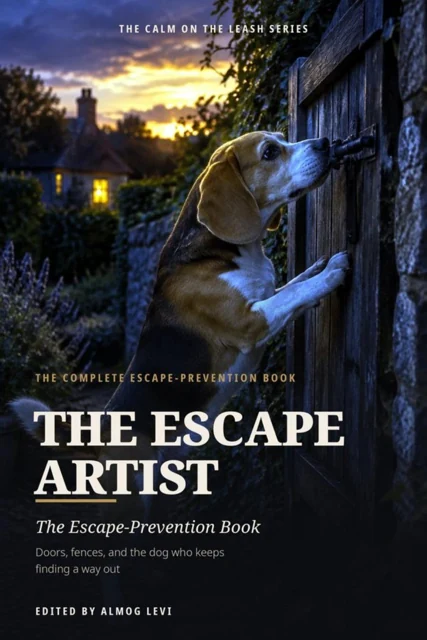
The gate is closed, but your dog finds a gap under the fence. A walk might help meet their needs, yet it will not fix an opening to traffic or a dog who panics at a noise. Start by preventing another escape.
Keep your dog with you or in a secure indoor space while you check fences, latches, and anything they can climb. Supervise yard time. Use a secure leash where needed, without leaving a tethered dog unattended. Check that identification is current. If your dog is missing now, begin the local lost-pet search promptly instead of waiting to inspect the fence.
Find what happens just before they leave
Do they run after wildlife, react to another dog at the boundary, leave when you're gone, or try to flee storms and fireworks? These are different problems. Note when escapes occur and where the route begins. Give safe activities and company when the yard is otherwise empty, but do not assume boredom if the dog is frantic, injured, or trying to get back to you.
Teach recall in secure places and reward returns well. It is useful, but not a substitute for a reliable barrier. If your dog has broken through gates or windows, repeatedly escapes despite repairs, or shows distress when alone, ask your veterinarian and a qualified, reward-based behavior professional for an individual plan. Keep using supervision and secure boundaries while training develops.
The goal is not to make the yard so interesting that a dangerous gap stops mattering. Close the gap first, then work out why your dog kept looking for it. After the gap is secured, the dog escape-prevention guide can help you look at the wider escape pattern, no training replaces the barrier.
Sources & care notes
Sources: Dogs Trust: How to stop your dog escaping or running away. Dogs Trust: Separation anxiety in dogs.
This article is general education, not veterinary advice. If your dog seems unwell, is in pain, or something changed suddenly, call your vet. If it could be an emergency, do not wait.
Frequently asked questions
Is more exercise enough?
No. A walk can help meet needs, yet it will not fix an opening to traffic or a dog who panics at a noise. Start by preventing another escape.
What do I do first?
Keep your dog with you while you check fences, latches and climbable spots, supervise yard time, and make sure identification is current.
Why does my dog escape?
Different reasons need different plans: chasing wildlife, reacting to a dog at the boundary, leaving when alone, or fleeing storms and fireworks. Note when and where each escape begins.
Is good recall enough?
It is useful, but not a substitute for a reliable barrier. Teach recall in secure places and reward returns well.