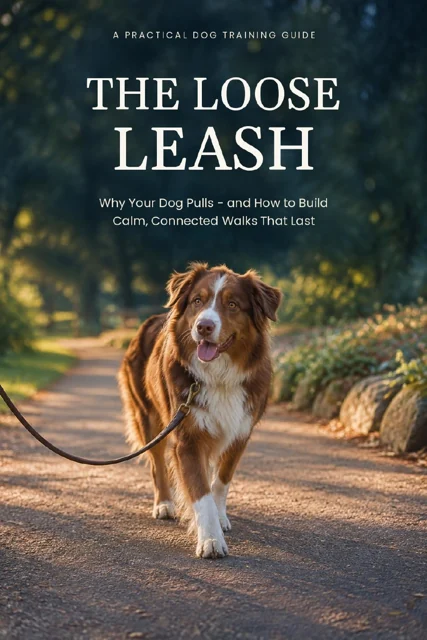
For some dogs, seeing the leash and rushing the door is the most exciting part of the walk. You can teach a steadier routine at home, at a time when you are not racing to get outside. If your dog urgently needs to toilet, take them out first, a calm doorway exercise can wait.
Practice one small step
Pick a simple behavior your dog can do easily, like standing with four paws down while you pick up the leash. Mark and reward that moment. If excitement rises, pause briefly or step back to an easier part of the routine, do not keep closing the door on a frightened dog or withhold a needed walk. Practice with no visitors or other distractions before adding real departure cues.
When you are ready to build beyond the doorway, the puppy loose-leash walking guide breaks practice into small steps.
Let the walk match the day
On an easy route, give your dog safe chances to sniff and explore on a comfortable leash. On a day when your dog seems worried or reactive, choose a quieter option and more space. The goal is a walk that feels manageable, not a fixed five-minute sniff quota or a promise that every later reaction will disappear. Once departures are easier, the loose-leash walking guide can help with a steadier walk beyond the front door.
Where should I start?
Choose what fits. Nothing is saved or submitted.
Sources
Sources & care notes
Frequently asked questions
My dog is fine on the walk but wild at the door. Why?
The doorway is where arousal spikes, so practice there on quiet days, not mid-rush.
What do I reward at the door?
Four paws on the floor while you pick up the leash, then a relaxed release outside.
Should the dog sit before walks?
A settle is enough. The goal is a repeatable start, not a perfect pose.
What about the walk itself?
Build loose-leash steps separately; the calm start and the walk are two skills.