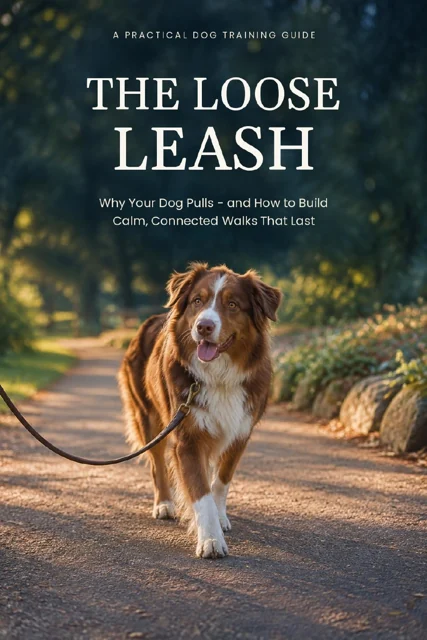
The leash comes off the hook and your dog starts bouncing. The walk is exciting, and every rushed departure has taught them that barking is part of the launch. You do not need to wait for a perfectly still dog before every walk, but you can make the first minute less frantic.
Check that the leash and harness fit comfortably. If your dog hides, freezes, or growls when equipment appears, that is a different problem from excited jumping, check for pain and introduce the equipment gently rather than insisting on a calm sit.
Practice when you are not leaving
Pick up the leash, reward a moment of four paws on the floor, then put it back. Repeat later. When that is easy, clip it on, reward, and unclip without opening the door. Move on to approaching the door, touching the handle, and opening it a crack, each in a short session. If your dog barks or leaps, make the next step simpler rather than standing there indefinitely with the walk withheld.
On a real walk, use the easiest version that works. Prepare treats and equipment beforehand, clip on in a quiet place, and reward your dog for walking with you through the doorway. Give them a chance to sniff soon after leaving. A few calm steps count more than a long performance at the threshold.
If your dog grabs the leash or your clothes and you cannot manage the exit safely, ask a qualified, reward-based trainer for hands-on help. A good walk begins with both of you able to get out the door without a scramble. For the walk skills that follow a calm doorway, see the everyday leash-walking guide. Practice the gear routine when no one is rushing out.
Does one of these sound like yours?
Choose what fits. Nothing is saved or submitted.
Sources & care notes
Sources: Dogs Trust: How to train your dog to be patient in doorways. Dogs Trust: How to train your dog to wear a harness.
Frequently asked questions
How do we start walks calmly?
Practice picking up and clipping the leash when no walk is due, rewarding four paws on the floor.
Should I withhold the walk if they bark?
No. Withholding walks as a lesson builds frustration. Simplify the doorway routine instead.
What if equipment scares them?
Hiding, freezing or growling at the leash is a different problem. Check for pain and introduce equipment gently.
What if they grab the leash on the way out?
Let go and let the leash drop, then restart the exit calmly. A second leash clipped on before the door gives you a backup.