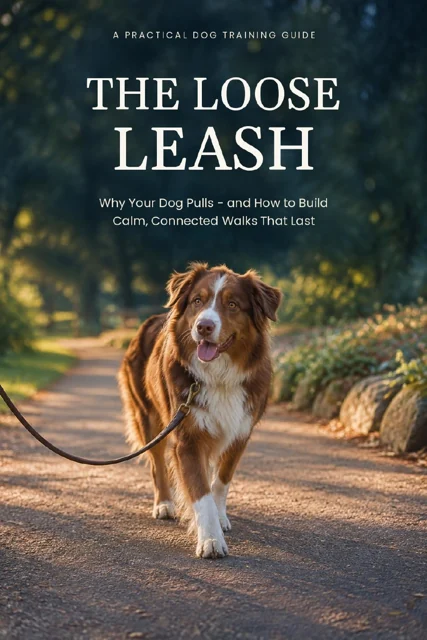
You stop to talk to a neighbor. Your dog snatches the leash and starts shaking it. You pull back, they pull harder. What looks like a battle over the equipment may be a clue about what just happened in the walk.
Dogs Trust calls this “lead ragging” and describes several possible reasons: anxiety about an approaching dog or person, frustration about being unable to reach something, or boredom and an invitation to play. The same movement can mean different things in different dogs. Do not decide that your dog is “being dominant” from the leash alone.
Find the moment before the grab
For a few walks, note the first bite of the leash. Did another dog approach? Did you stop moving? Did the route get busier? Did the dog reach the end of the leash while trying to move away? One pattern may appear quickly. Dogs Trust suggests identifying the situations that set off the behavior so you can prepare earlier.
If other dogs predict the grab, turn away sooner and give your dog more room. If long pauses do it, keep the walk moving and teach short, rewarding pauses separately in a quiet place. If the dog wants tug, carry a suitable toy and offer it before the leash becomes the game. Avoid tugging back on the leash: Dogs Trust warns this can make the interaction more exciting or more frustrating.
Keep the leash safe, not just tidy
A dog who bites through a single leash can get loose. Dogs Trust discusses a backup leash as one way to maintain secure control while you work on the underlying pattern. Use equipment your dog can safely wear and that you can handle, do not improvise a setup you cannot manage. If the dog redirects to your hands, clothes or another dog, seek veterinary and qualified behavior support promptly.
Teach an alternative on easier walks
Practice loose-leash walking in a calm location. Reward when your dog moves with you without grabbing the leash. If they need an outlet, a toy or a brief sniffing task can be a better choice than making the leash a tug object. Reward the calm moments too, not only the release after a bite, otherwise the dog may learn a new chain of “grab, release, collect treat.”
One good observation is worth more than a harsher leash. Find what happened just before the dog grabbed it, then make the next walk easier at that point. Once you've worked out what makes the leash hard to handle, the leash-walking guide can support easier walks, avoid turning leash biting into a tug-of-war.
What happens with the leash?
Choose what fits. Nothing is saved or submitted.
Sources & care notes
Sources: Dogs Trust, “Lead ragging,” https://www.dogstrust.org.uk/dog-advice/training/unwanted-behaviours/lead-ragging . Dogs Trust, “Dog walking problems, pulling on leash and how to help,” https://www.dogstrust.org.uk/dog-advice/training/unwanted-behaviours/pulling-on-lead .
A sudden change in behavior can have a medical cause. If something feels off, check with your vet first.
Frequently asked questions
Why does my dog bite the leash?
Usually excitement, sometimes frustration. Whatever the start, grabbing the leash has worked, so the habit persists.
Will a thicker leash stop it?
Maybe, but that is a bandage. For most dogs, a better habit earns more than a harder material to chew.
What behavior should I teach?
An incompatible one, such as nose to hand target or heel, plus a swap to a toy the moment the leash appears.
When is it more than excitement?
Watch the body language. Fear or pain behind leash grabbing deserves a vet check or professional help.