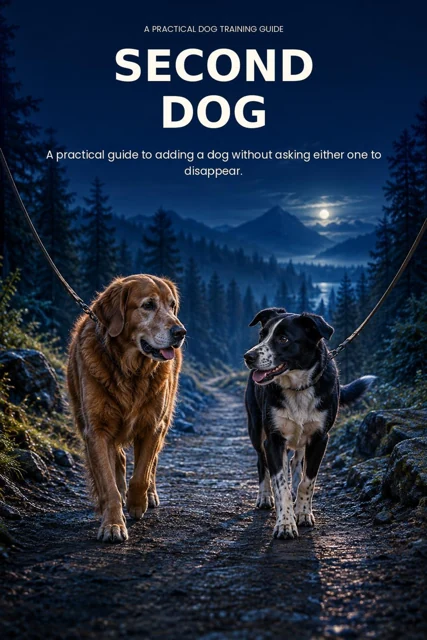
The dogs are running and making noise. One rolls, gets up, and goes back for more. Rough-looking play can be fine when both dogs choose it. The question isn't how loud they are, it is whether each dog can take a break and still wants to continue.
Watch for loose bodies, changing roles, and brief pauses. Does the chased dog sometimes chase? Can either dog move away without being followed? A play bow or a quick check-in can help, but no single gesture guarantees the whole interaction is comfortable.
Give a break before someone needs to shout
Call your own dog away for a short pause and reward them for returning. If both dogs freely re-engage, the play may continue. If one uses the chance to hide, move away, or stay by a person, end the play. Don't let your dog repeatedly pin or chase another dog who is trying to leave. If you see stiffness, hard staring, a closed mouth, repeated avoidance, or a snap, separate safely before conflict escalates.
Avoid grabbing collars between dogs in a fight, people can be bitten. If play repeatedly gets out of hand, arrange smaller, compatible one-to-one meetings rather than hoping a crowded dog park will sort it out. Pain or fatigue can also change a dog's tolerance, especially in an older dog. Ask your veterinarian about sudden changes or injuries.
Some dogs simply do not enjoy the same play style. A good day can be a walk near another dog without any wrestling at all. Friendship isn't measured by how much rough play they tolerate. For more on reading two dogs' comfort together, see the dog-to-dog household guide. Separate them when play stops being mutual.
Does one of these sound like yours?
Choose what fits. Nothing is saved or submitted.
Sources & care notes
Sources: Vet Voice: Is my dog playing or fighting?. Dogs Trust: How to understand your dog's body language.
This article is general education, not veterinary advice. If your dog seems unwell, is in pain, or something changed suddenly, call your vet. If it could be an emergency, do not wait.
Frequently asked questions
Is rough-looking play fine?
It can be, when both dogs choose it. Watch for loose bodies, changing roles and brief pauses.
What single signal matters most?
Whether each dog can move away without being followed. A play bow or a check-in helps, but no one gesture settles it.
How do we give a break?
Call your own dog away for a short pause and reward the return. If both dogs freely re-engage, play may continue. If one hides or stays by a person, end it.
What if my dog always chases and never gets chased?
That imbalance is worth a break and a better-matched play partner.