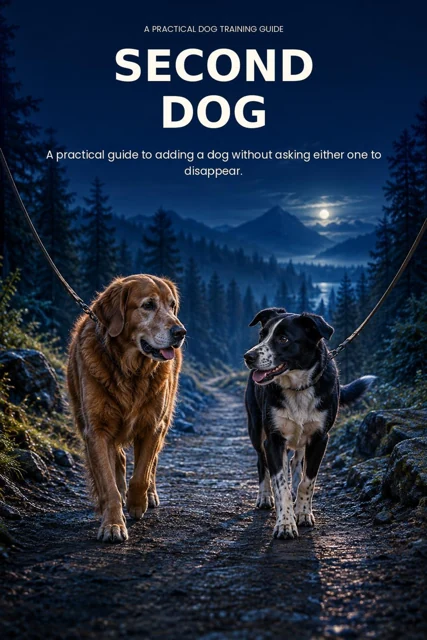
A dog approaches yours for a sniff. Your dog goes still, closes their mouth, and stops moving. That is a reason to give them space, not to wait for a bark to confirm it. Politely ask the other handler to move their dog away, and guide yours out without jerking the leash or pulling them nose-to-nose again.
On-leash greetings can be hard because neither dog can choose an easy exit. Skip them for now, especially with unfamiliar dogs. If your dog has snapped or bitten, keep greetings separated and seek a veterinarian and qualified, reward-based behavior professional for a safe plan. A sudden change in tolerance also needs a veterinary check.
Practice being near dogs without meeting
Choose a place with room to pass, not a narrow gate. Reward your dog for seeing another dog at a distance where they can keep walking, sniff the ground, and take food. Practice turning away before either dog closes in. Gradually build comfort with parallel movement only if both handlers can keep the dogs relaxed and separated, there is no need to force direct contact.
Pay attention to the whole body: loose movement and voluntary approach are different from stillness, tension, or a dog trying to escape. Even a dog who usually likes others may not want this particular greeting. Respecting a polite "no" now can prevent a much louder one later. For more on giving dogs space around one another, see the dog-to-dog interaction guide. End a greeting when either dog stiffens rather than waiting for conflict.
Sources & care notes
Sources: VCA Animal Hospitals: Fears and Phobias in Dogs - Animals and People. Dogs Trust: How to understand your dog's body language.
This article is general education, not veterinary advice. If your dog seems unwell, is in pain, or something changed suddenly, call your vet. If it could be an emergency, do not wait.
Frequently asked questions
Should I let the sniff continue?
No. A dog who goes still, closes their mouth and stops moving is asking for space. Politely ask the other handler for room.
Are on-leash greetings safe?
They can be hard because neither dog can choose an easy exit. Skip them for now, especially with unfamiliar dogs.
What do we practice?
Choose a place with room to pass, and reward your dog for seeing another dog at a distance where they can keep walking and take food.
What do I watch in the body?
Loose movement and voluntary approach differ from stillness, tension or trying to escape. Even a friendly dog may not want this particular greeting.