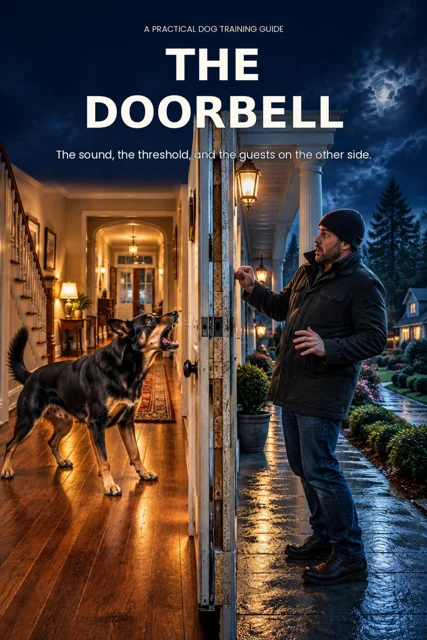
A jumping greeting can come from excitement, frustration, worry, or a learned bid for attention. The first job is to stop rehearsing the rush at the door. Do not wait until guests are inside to invent the plan. If it also happens when your own people come home, the plan for the same doorway rush with family uses the same steps.
Before the knock
Have your dog in another comfortable area or behind a secure gate while guests enter. Give them something suitable to do, then bring them in only when the room is settled and everyone can follow the same plan. Ask guests not to touch or talk to the dog while they jump. Reward four paws on the floor, a short calm greeting can come afterward.
Practice without real guests
Rehearse with one familiar person in an easy setting, rewarding brief moments of feet-on-floor or choosing a mat. End while it is still going well. If the dog is stiff, growling, snapping, or trying to escape, treat this as a safety and fear question rather than ordinary exuberant jumping. Keep distance and seek qualified support. A worried dog does not need to greet guests. Secure separation is safer than contact under pressure.
What happens at the door?
Choose what fits. Nothing is saved or submitted.
Sources
Sources & care notes
Frequently asked questions
What do we change first?
Stop rehearsing the rush. Have your dog in another comfortable area or behind a secure gate while guests enter, and bring them in when the room is settled.
How do we practice?
Rehearse with one familiar person in an easy setting, rewarding feet-on-floor or choosing a mat, and end while it is still going well.
When is jumping more than excitement?
If the dog is stiff, growling, snapping or trying to escape, treat it as worry and get help instead of pushing greetings.
Who needs to follow the routine?
Everyone who enters regularly, so the greeting rules stay predictable.