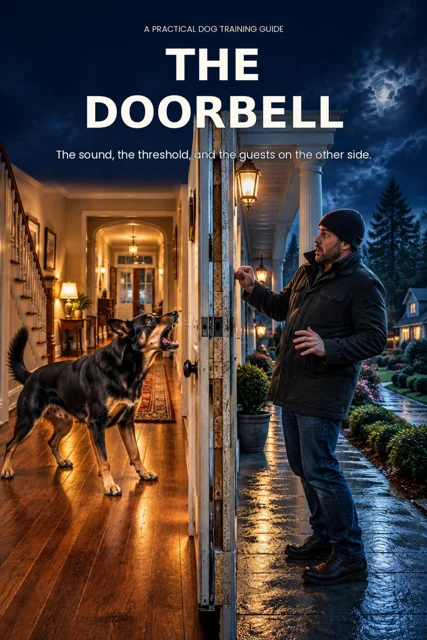
A guest knocks, your dog stiffens and growls, and everyone wonders whether a greeting might help. Do not make a visitor the test case. A growl is information: your dog needs distance or is struggling to cope. The safest first move is to manage the door and give the dog a place away from guests.
Dogs Trust advises keeping a dog who behaves aggressively toward visitors separate and away from the front door, using barriers and seeking a vet check, especially if the behavior is new. This is not a matter of winning the dog's respect or insisting every guest pet them.
Before someone arrives
If the visit is planned, put your dog in a safe separate area before the door opens. Have water, comfortable rest and suitable enrichment there. Tell the visitor not to approach, stare at or follow the dog if the dog moves away. If the visit can be postponed while you get help, that may be better than asking your dog to cope with a crowded room.
For unexpected deliveries, a door note or agreed no-knock arrangement can buy time to secure the dog safely. Do not rely on a visitor knowing your household routine. If your dog can reach the front door when you open it, change the setup before another arrival.
What a growl does and does not tell you
Dogs may be fearful, anxious, overstimulated, in pain or protective of something they value. Behavior at the door is not enough to diagnose which. Dogs Trust notes early signs such as avoiding the visitor, tucked tail, ears back or lip-licking. Respect a dog who moves away. Do not punish the growl or force a greeting. Suppressing the warning does not make the dog comfortable.
If the dog has snapped or bitten, the situation needs a tailored safety plan. Keep dog and visitor apart, seek appropriate first aid if anyone is injured. A veterinarian can check health factors and refer you to a qualified clinical behavior professional. Dogs Trust specifically recommends professional help where aggression toward visitors is involved.
What to do today
Pick one place where the dog can rest undisturbed and decide how the door will be managed. Share that plan with everyone who answers the door. Training for calm visits may come later, safety should not wait for a successful exercise. For a longer plan around arrivals, see the visitor and doorway guide. Keep visitors apart from a growling dog and get individual safety help.
What situation is it?
A reading choice, not a diagnosis. If someone may be bitten, keep space and get qualified help.
Source: Dogs Trust, “Dog aggression toward visitors: causes and what to do,” https://www.dogstrust.org.uk/dog-advice/training/unwanted-behaviours/aggression-towards-visitors .
Sources & care notes
This article is general education, not veterinary advice. If your dog seems unwell, is in pain, or something changed suddenly, call your vet. If it could be an emergency, do not wait.
Frequently asked questions
Should a visitor greet the dog to test the growl?
No. Do not make a visitor the test case. A growl says your dog needs distance or is struggling, and the first step is a safe separate space.
What do we do before a planned visit?
Settle your dog in a safe area with water, comfortable rest and enrichment before the door opens, and ask the visitor not to approach, stare at or follow them.
What about deliveries?
A door note or an agreed no-knock arrangement buys time to secure your dog. Do not rely on a visitor knowing your household routine.
When is a vet check part of this?
Especially when the behavior is new. Ask your veterinarian before treating it as a visitor problem alone.