You throw the ball until your arm is tired. Your dog comes home pacing and asking for another throw. Running hard does not always lead to rest, a fast, repetitive game can leave some dogs more worked up, especially when they have no natural pause.
Watch for the point where play changes: rough grabbing, frantic scanning for the ball, difficulty responding to a familiar cue, or a long recovery afterward. Stop before that point. If the behavior is new, extreme, or paired with pain, overheating, or trouble breathing, speak with your veterinarian. Physical safety matters more than finishing a game.
Give the game a beginning and an end
Try a few throws rather than a long session. Between them, pause for a sniff or a simple cue your dog can easily do. Let the dog have a turn carrying the toy, then trade fairly if you need it back. End with a calm walk and a chance to sniff rather than another high-speed chase. Some dogs prefer scent games, tug with clear pauses, or a slower search for a hidden toy.
If your dog struggles to release the ball or becomes frantic when you stop, don't snatch it away. Practice trades separately and make the transition to a quiet activity predictable. Increase or reduce play according to how your dog settles later, not just how eager they look during the game.
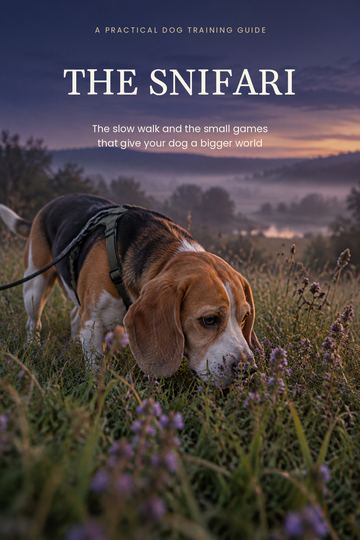
Exercise is not only a question of minutes or distance. For this dog, the shape of the game may matter more than the number of throws. For a lower-key option alongside fetch, see the slow sniff-walk guide. Watch whether this dog can settle better afterward.
Sources & care notes
Sources: Battersea: How to play with your dog. Dogs Trust: Helping a hyper or restless dog to calm down.
This article is general education, not veterinary advice. If your dog seems unwell, is in pain, or something changed suddenly, call your vet. If it could be an emergency, do not wait.
Frequently asked questions
Why more wired after fetch?
Running hard does not always lead to rest. A fast, repetitive game can leave some dogs more worked up than tired.
What do I watch for?
The point where play changes: rough grabbing, frantic scanning for the ball, trouble with a familiar cue, or a long recovery afterward. Stop before that point.
How do we shape the game?
Try a few throws rather than a long session, pause between them, and make the transition to a quiet activity predictable.
What if they cannot release the ball?
Do not snatch it. Practice trades separately and build the ending of the game as its own skill.