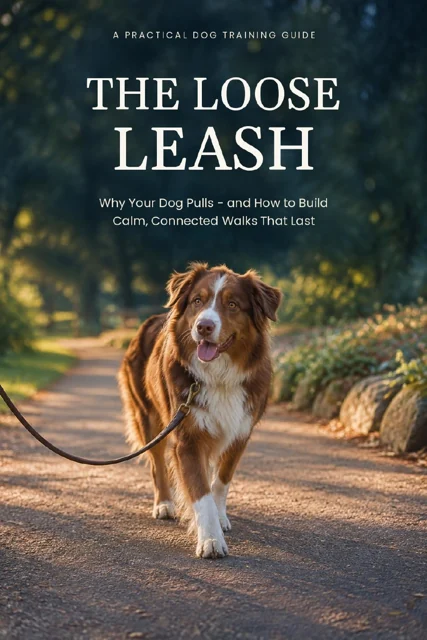
The first part of the walk is easy. Then a truck passes, your dog turns, and the leash goes tight in the direction of home. They may be frightened, tired, hot, sore, or simply ready to finish. You cannot tell from pulling alone.
Check for limping, heavy panting, sore paws, heat, or a sudden change in pace. Stop in a safe place and offer water if appropriate. If your dog seems unwell, cannot walk normally, or this is a new pattern, seek veterinary advice. Don't insist on finishing the route just to prove they can.
Read the turning point
Note where they begin to pull. Is it near traffic, a particular dog, a noisy building site, or after a long distance? Try shorter walks that turn back before the hard point. Give time to sniff and choose a quiet route. If your dog relaxes once away from a specific place, that is a clue about what needs changing.
Practice loose-leash walking in a low-pressure area, rewarding your dog for moving with you while the leash is slack. Don't turn the urgent trip home into a stop-and-start lesson if your dog is scared or uncomfortable. Training a calmer response to a trigger can come later, at a distance where they can still eat and move freely.
A dog who pulls home is not making a case against every walk. They may be showing you exactly where today's walk stopped working.
Does one of these sound like yours?
Choose what fits. Nothing is saved or submitted.
Sources & care notes
Sources: Dogs Trust: Pulling on lead - how to help. VCA Animal Hospitals: Fear of Noises in Dogs.
This article is general education, not veterinary advice. If your dog seems unwell, is in pain, or something changed suddenly, call your vet. If it could be an emergency, do not wait.
Frequently asked questions
Why the sudden pull home?
They may be frightened, tired, hot, sore, or simply ready to finish. Read the turning point before deciding.
What should I check?
Limping, heavy panting, sore paws, heat, or a sudden change in pace. Stop in a safe place and offer water if appropriate.
When is this a vet question?
If your dog seems unwell, cannot walk normally, or the pattern is new.
What do we change?
Shorter walks that turn back before the hard point, time to sniff and choose, and loose-leash practice in a low-pressure area.