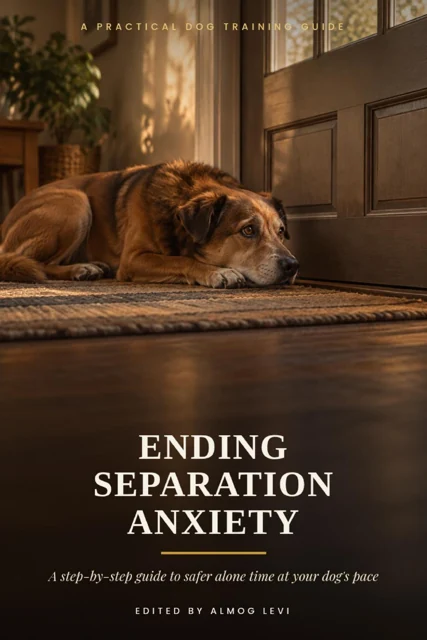
You stand up from the sofa and your dog gets up too. They settle in the kitchen while you cook, then follow you back. Enjoying your company is not by itself a diagnosis. The question is how they cope when you are out of sight or away from home.
If you are concerned, observe a short, safe absence with a camera or ask someone you trust to watch. Do they rest, eat, and return to ordinary activities? Or do they pace, vocalize, drool, refuse food, or try to escape? If they are distressed, shorten absences where possible and ask your veterinarian and a qualified behavior professional for a plan. Don't leave a panicking dog alone repeatedly to "teach independence."
Build comfortable distance while you are still home
Offer a resting place your dog likes and reward them for choosing it while you move around. Step briefly to the other side of an inside doorway and come back before they become worried. Go slowly, keeping the exercise easy and predictable. If they are happy to stay on their bed while you make tea, that is a useful choice. If they prefer to accompany you and otherwise cope well when alone, there may be nothing to fix.
A newly adopted dog may follow closely while the home still feels unfamiliar. Give them time and a steady routine. A sudden change in clinginess alongside illness, pain, or aging calls for a veterinary check. The goal is not to stop a friendly shadow from loving your company. It is to know whether they feel safe without it. If following becomes panic when you step away, the separation-anxiety guide can help you explore alone-time practice, following alone is not a diagnosis.
Does one of these sound like yours?
Choose what fits. Nothing is saved or submitted.
Sources & care notes
Sources: Dogs Trust: Separation anxiety in dogs. ASPCA: Separation Anxiety.
This article is general education, not veterinary advice. If your dog seems unwell, is in pain, or something changed suddenly, call your vet. If it could be an emergency, do not wait.
Frequently asked questions
Is following everywhere a problem?
Not by itself. Enjoying your company is normal. What matters is how they cope when you are out of sight or away from home.
How do I check?
Observe a short, safe absence with a camera. Do they rest, eat and return to ordinary activities, or pace, vocalize, drool or try to escape?
What should we practice?
Comfortable distance while you are still home: reward settling on a bed they like, then step briefly across an inside doorway and return before they worry.
When should I worry?
A sudden change in clinginess alongside illness, pain or aging calls for a veterinary check. A new rescue may simply need time.